
I may earn a commission when you buy through links on the site at no extra cost to you. By using the links, you are helping support College EDC, and I genuinely appreciate your support.
From Acceptance to Arrival: Your 4-Month College Prep Timeline
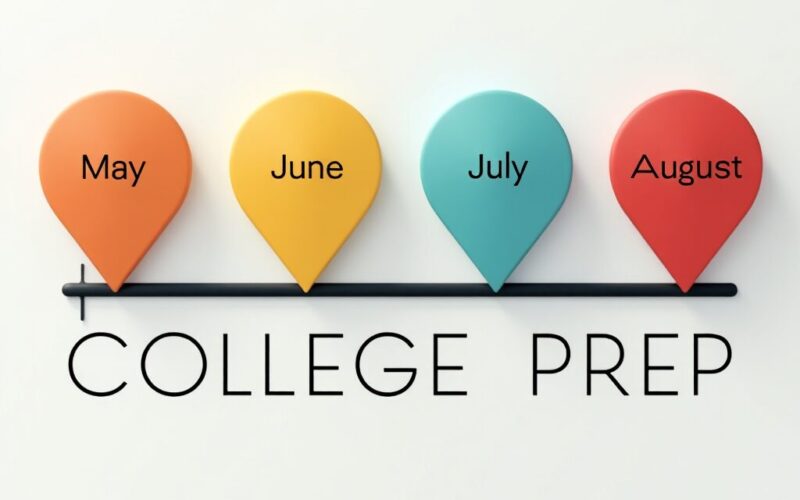
Congratulations on your college acceptance! The transition from high school to college is an exciting yet challenging time. With so many tasks to complete before move-in day, staying organized is crucial.
This comprehensive timeline breaks down everything you need to do from May through August to ensure you’re fully prepared for your college journey once the fall semester starts.
May
May marks the pivotal transition from college acceptance to commitment. With the standard May 1st decision deadline for most institutions, this month requires finalizing your college choice, submitting enrollment deposits, and accepting financial aid packages.
It’s also time to handle critical first steps like housing applications and orientation registration. As high school winds down with final exams and AP tests, you’re simultaneously laying the groundwork for your college journey.
Academic Prep
- Accept your admission offer before the deadline (typically May 1st). This is non-negotiable—missing this deadline could result in losing your spot at your chosen school.
- Submit your final high school transcripts to your college’s admissions office. Your college needs these records to confirm your graduation and finalize your admission.
- Register for freshman orientation as soon as possible. The best dates and times fill quickly, so don’t delay. Orientation is crucial for getting acquainted with campus resources and meeting fellow freshmen.
- Take any required placement tests for math, writing, or foreign languages. These assessments determine which entry-level courses you’ll need to take, potentially saving you time and money by placing you in appropriate classes.
- Review your financial aid package carefully and accept or decline the offered aid within the specified timeframe. Ask questions about anything you don’t understand — financial aid offices are there to help.
- Set up your college email account and make checking it a daily habit. Important communications about housing, registration, and orientation will be sent here.
- Join official incoming student social media groups to start connecting with future classmates and stay informed about events and deadlines.
Room & Board
- Submit your housing application and deposit if you haven’t already done so. Housing assignments are often first-come, first-served, so earlier applications may have better options.
- Complete the roommate matching questionnaire if you’re going with random assignment. Be honest about your living habits for the best compatibility match.
-
Download roommate finding apps or join social media groups/pages specifically for incoming freshmen at your college. These platforms can help you connect with potential roommates who share your interests.
- Research dining plan options and select one that aligns with your eating habits and schedule. Consider factors like meal flexibility, dietary restrictions, and cost.
Financial Tasks
- Create a detailed budget for college expenses beyond tuition, such as books, supplies, personal items, entertainment, and transportation. Consider using budgeting apps, like Mint or NerdWallet.
- Apply for additional scholarships — many have summer deadlines and can significantly reduce your out-of-pocket expenses. Continue to research and apply for scholarships as much as you can.
- Set up a bank account that offers convenient access near campus or convenient online banking features. Look for student-friendly options with no minimum balance requirements and free checking.
- Have an open conversation with family or financial supporters about expectations regarding expenses, spending money, and financial responsibilities.
- Consider applying for a job to work at over the summer so you can save up some extra money before heading off to college.
June
June transitions you from high school graduate to college-bound student as most orientation sessions begin this month. This is when your college experience starts taking tangible shape through class registration, meeting potential roommates, and receiving your official student credentials.
Continued Academic Prep
- Attend summer orientation to learn about academic expectations, campus resources, and student life. Take notes and ask questions — this is your introduction to college life.
- Meet with an academic advisor to discuss your academic goals and plan your fall course schedule. Their guidance can help you navigate degree requirements and select appropriate classes.
- Register for fall semester classes as soon as your registration window opens. Popular courses fill quickly, so have backup options ready.
- Review the academic calendar for important dates like add/drop deadlines, holidays, and exam periods to plan your semester accordingly.
- Research professors for your upcoming courses using resources like Rate My Professors or your college’s course evaluation system to get insights into teaching styles and expectations.
- Familiarize yourself with your major requirements to understand the path to graduation and prerequisite sequences. Ask your advisor about a degree audit.
Dorm & Roommate Communication
- Contact your assigned roommate(s) to introduce yourself and begin building this important relationship if you haven’t done so already. Discuss expectations, schedules, pet peeves, and shared values.
- Coordinate who’s bringing shared items like mini-fridges, microwaves, or TV to avoid duplication and maximize your limited space.
- Create a comprehensive dorm room packing list, but resist the urge to buy everything immediately. Wait until you’ve seen your room’s size and storage capacity.
- Research storage options if you’re attending school far from home, particularly if you’ll need somewhere to keep belongings during breaks.
Health & Insurance
- Submit required health forms and vaccination records before deadlines to avoid registration holds.
- Schedule necessary medical and dental check-ups before leaving for college to address any health concerns.
- Arrange for prescription transfers to a pharmacy near campus if you take regular medications.
- Review student health insurance options and decide whether to enroll in the school’s plan or maintain coverage under a family plan (check coverage networks in your college’s area).
July
July shifts your focus toward the practical aspects of college life as the reality of your fall semester approaches. This month centers on finalizing financial arrangements, including completing loan requirements and planning for first semester payments.
It’s also time to begin the preparations for campus living: purchasing dorm necessities, textbooks, and underrated items students often forget.
Course Planning
- Purchase or rent textbooks after comparing prices from the campus bookstore, Amazon, Chegg, and other online retailers. Consider digital versions from RedShelf for convenience and cost savings.
- Download your class schedule and campus map to your phone for easy reference during your first weeks.
- Research campus resources like tutoring centers, writing labs, and academic support services that can help you excel in your courses.
- Plan your commute between classes, especially if you have back-to-back courses in different buildings. Walk the routes before classes begin to estimate travel times.
Technology and Supplies
- Research technology requirements specific to your major. Some programs require particular software or hardware specifications.
- Purchase or update your laptop and necessary software. Many colleges offer student discounts on technology purchases — check with your IT department.
- Invest in a portable hard drive and portable charger to protect your work and ensure your devices stay powered throughout long days on campus.
- Purchase basic school supplies like notebooks, planners, pens, and highlighters. A reusable planner, like the Rocketbook Academic Planner, or a digital calendar system is essential for managing your college workload.
Dorm/Apartment Prep
- Begin purchasing dorm essentials like XL twin bedding, towels, and personal care items. Look for space-saving products designed specifically for dorm living.
- Check residence hall policies for prohibited items such as candles, certain appliances, or adhesive wall decorations to avoid purchasing things you can’t use.
- Purchase storage solutions like under-bed containers, over-door organizers, and desk caddies to maximize your limited space.
- Plan your dorm room layout with your roommate(s) to ensure furniture arrangements accommodate everyone’s needs and preferences.
Campus Life
- Research student clubs and organizations that align with your interests or career goals. Getting involved early helps build your community and resume.
- Look into on-campus job opportunities if you need to work during the academic year. The best positions fill quickly, and some may offer training before classes begin.
- Review campus safety information, including emergency procedures, the location of blue light phones, and how to register for campus alert systems.
- Learn about campus transportation options like shuttles, bike-share programs, or public transit systems that can help you navigate the campus and surrounding area.
August
August brings the culmination of your college preparation journey as move-in day approaches. This month demands attention to final deadlines and logistical details: making tuition payments, confirming dates, and completing last-minute paperwork.
Final Preparations
- Pay your tuition bill or confirm your payment plan is in place before the deadline to avoid late fees or class cancellations.
- Print or save digital copies of your class schedule to have backup access if technology fails during your first week.
- Pack for move-in day using your checklist. Organize items by category for easier unpacking and use vacuum seal bags to compress bulky items.
- Confirm your specific move-in date and time slot to ensure a smooth arrival process. Some colleges assign staggered arrival times to manage traffic and elevator usage.
- Plan your move-in day logistics including parking locations, who will help you move, and what supplies (dollies, tools, etc.) you might need.
- Familiarize yourself with the campus layout before classes start by taking self-guided tours to locate your classrooms, dining halls, libraries, and other important buildings.
- Review the syllabus for each course (if available) beforehand to understand expectations and prepare for your first assignments.
Final Thoughts
This timeline serves as a roadmap for your college preparation journey, but remember that every student’s situation is unique. Adapt these suggestions to fit your specific needs and college requirements.
The key to a successful transition is staying organized, being proactive, and maintaining open communication with your college and support system. Check out College EDC for more in-depth guides, college essentials, and resources to help you thrive in college!